Event | 3 mins read
June 19, 2026

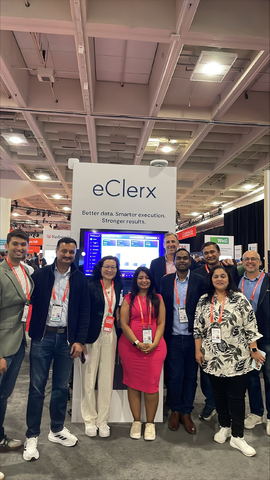
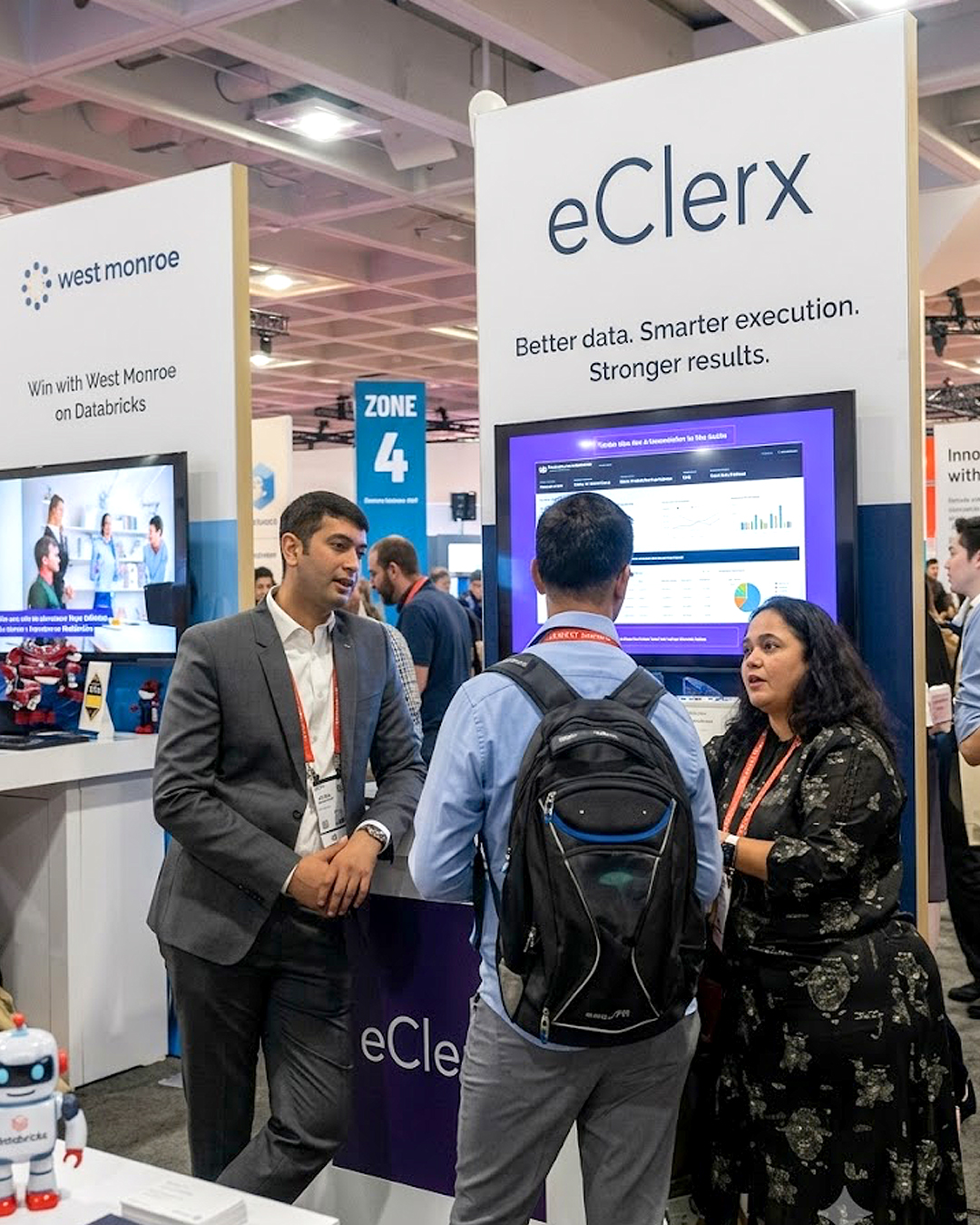
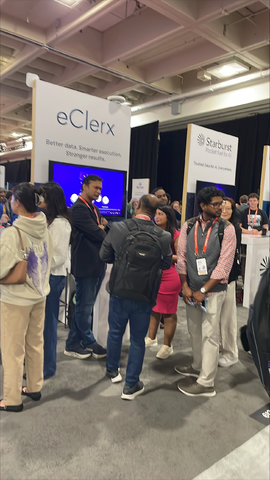
eClerx was proud to take part in Databricks’ 2026 Data + AI Summit as an official partner. The event brought together data practitioners, business leaders, and AI innovators from more than 160 countries to explore the latest technologies and trends shaping the future of data, analytics, and AI.
During the summit, the eClerx team showcased the real-world approaches that are helping clients move beyond data modernization to begin operationalizing AI at scale, transforming data into faster, more informed business decisions.
Here are several key takeaways our team gained over the course of the event:
● AI-ready data is becoming the foundation for agentic AI
Organizations have invested heavily in modern data platforms, but the next challenge is ensuring that data can be effectively consumed not only by people, but also by AI agents. One of the strongest themes from the summit was the growing need for AI-ready data foundations that make information accessible, governed, and actionable for intelligent systems.
During her session, From Legacy Workflows to Intelligent Retail Decisioning on Databricks, Rajasi Behere, Associate Principal, Digital RSF at eClerx, highlighted how modern data architectures can serve as the foundation for agent-driven decision-making, enabling retailers to move beyond dashboards and toward real-time, contextual actions.
● The future belongs to decision-centric enterprises
Many organizations have successfully built lakehouses and centralized their data, yet still struggle to translate insights into business outcomes. A recurring discussion at the summit centered on the “decisioning gap”, the disconnect between having access to data and being able to act on it effectively.
As businesses increasingly seek to operationalize AI, the focus is shifting from analytics alone to decision intelligence. The most successful organizations are connecting data, analytics, AI, and business workflows to accelerate decisions across six decision domains: merchandising, digital shelf, marketing, supply chain, pricing, and customer engagement.
● Agentic AI is moving from experimentation to execution
Agentic AI emerged as one of the most significant themes of the event. New capabilities announced by Databricks, including Genie One and expanded Agent Bricks functionality, signal a broader industry shift toward AI systems that can reason, orchestrate workflows, and support decision-making at scale.
For enterprises, this creates new opportunities, but also highlights the importance of domain expertise, governance, and operational guardrails. As organizations deploy more AI agents, success will increasingly depend on combining platform capabilities with industry-specific knowledge and business context.
● Retail is entering the era of agentic commerce
One of the most forward-looking conversations at the summit focused on the rise of agentic commerce, where AI agents increasingly assist customers throughout the buying journey and may even interact directly with digital storefronts on their behalf.
This evolution has significant implications for retailers. Product content, pricing strategies, customer experiences, and digital shelf optimization will need to be designed not only for human shoppers, but also for AI-driven interactions. As these models mature, retailers that prepare early will be better positioned to compete in an increasingly automated commerce ecosystem.
● Governance remains critical as AI scales
As organizations expand their AI initiatives, governance is becoming a business imperative rather than a technical consideration. New capabilities such as Databricks’ Unity AI Gateway reflect the growing importance of centralized oversight, cost management, model governance, and responsible AI practices.
The summit reinforced that sustainable AI adoption requires more than powerful models. It depends on trusted data, transparent governance frameworks, and operational controls that ensure AI-driven decisions remain accurate, secure, and aligned with business objectives.
Event gallery






Featured insights